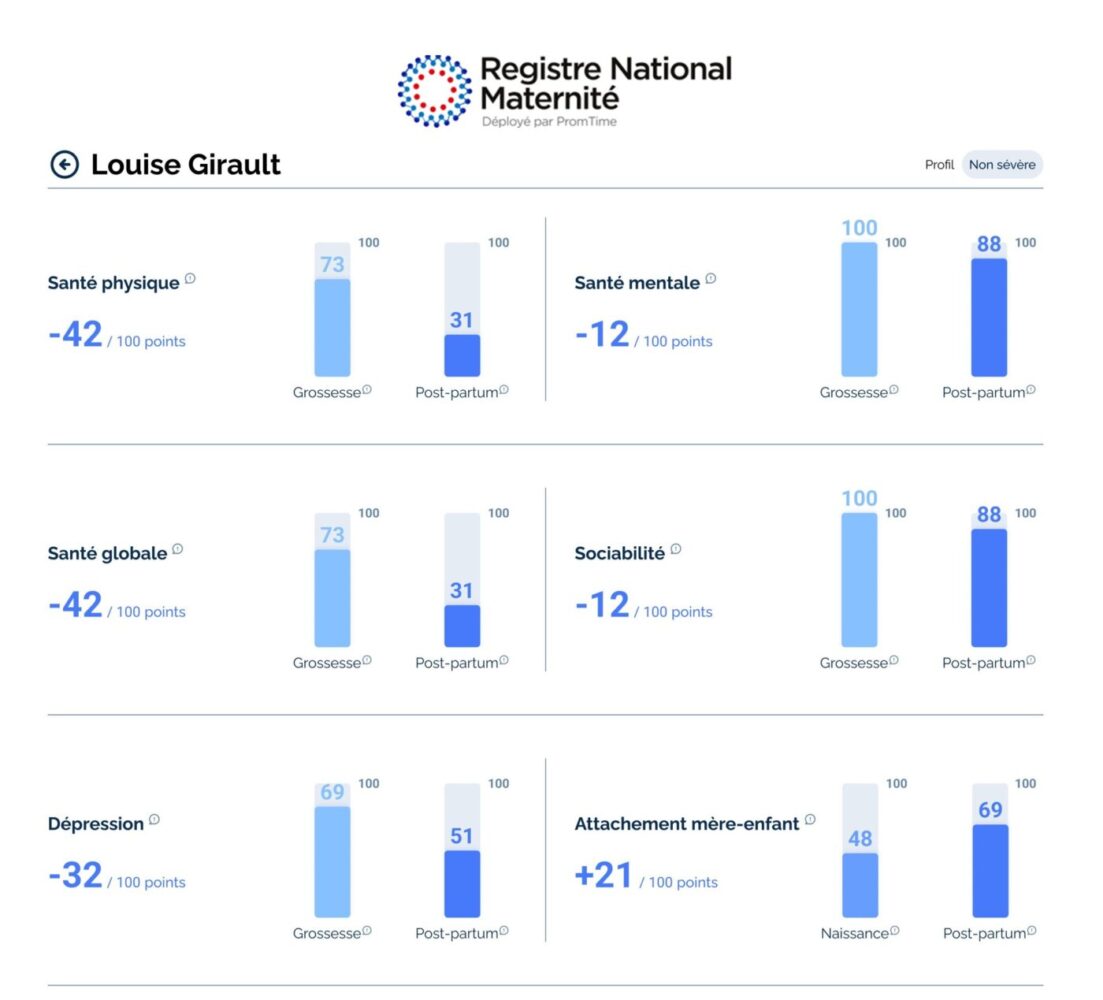
Ultrasounds, fetal monitoring, blood tests, cervical examination: obstetrics has no shortage of objective examinations.
But these indicators reveal nothing about anxiety before delivery, exhaustion in the first weeks, or feelings of isolation when breastfeeding does not go as planned. Depression, incontinence, mother-child bonding, breastfeeding, confidence in the maternal role, and childbirth experience.
PROMs in obstetrics help improve quality of life during pregnancy and after delivery. They are also associated with reduced complication and litigation rates.
“The digitalization of PROMs, PREMs and CROMs does not slow down activity. We can benchmark ourselves using case-mix-adjusted indicators through randomized data collection.”
Prof. Patrick Rozenberg, President, French National College of Gynecologists and Obstetricians
For pregnancy & childbirth
Two patients with medically comparable pregnancies and deliveries can present radically different health outcomes. PROMs enable you to:
Quantify the real impact of pregnancy and delivery on daily life beyond clinical parameters
Assess symptoms such as postpartum depression, incontinence, persistent pain, and sleep disturbances
Track quality of life changes during pregnancy and after delivery
Personalize care according to specific needs: psychological support, pelvic floor rehabilitation, breastfeeding support
Aggregated data support continuous improvement of care pathways and clinical research.
“Your participation in the Registry counts towards Gynerisq accreditation in the areas of practice improvement, teamwork, and patient relationship.“
Dr. Olivier Multon, Gynerisq Expert Board
National Maternity Registry
PromTime deploys the National Maternity Registry using the ICHOM standardized methodology with the support of:
French National College of Gynecologists and Obstetricians
French National College of Midwives
The National Union of Patient Associations accredited by the French Ministry of Health (France Assos Santé)
CIANE (French Inter-Association Network for Childbirth)
Gynerisq, the accreditation body approved by the French National Authority for Health
Mayotte Regional Health Agency
Since 2024, PromTime has deployed the National Maternity Registry in partnership with the French College of Patient Outcomes.